
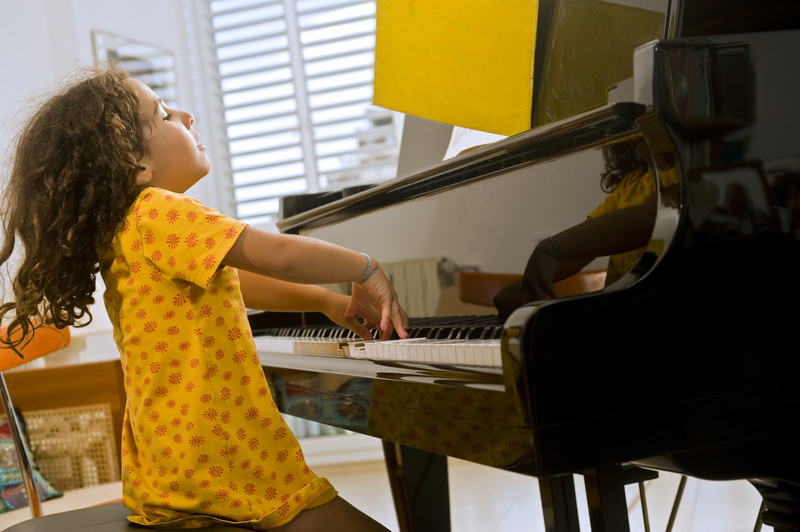
A lot of parents come to us a little nervous. Not for their child, usually, but for themselves. They remember their own childhood piano lessons, the metronome, the scales, the feeling that music was something to get right rather than something to enjoy. They worry the same thing will happen to their child.
So I want to share a few of the ways our teachers actually approach those very first lessons, because they look nothing like what most of us remember.
Repetition Doesn't Have to Feel Like Repetition
Every instrument requires repetition. There's no way around it, a skill has to be practiced to become natural. But repetition and drilling are not the same thing, and our teachers work hard to keep the two separate.
Instead of asking a young student to play the same four notes ten times in a row, a teacher might turn it into a game: clap the rhythm first, then tap it on the table, then whisper the note names while playing, then finally play it with full sound. By the time the student has played those four notes correctly, they've actually repeated them just as many times, but it felt like four different activities, not one tedious one. Some teachers use simple point systems, little challenges, or turn a phrase into a "boss level" the student has to beat. The repetition is still doing its job. It just doesn't feel like homework.

Learning to Read Music Before Ever Touching an Instrument
One of the hardest parts of starting an instrument is that a beginner is often asked to do two brand new things at once, read a completely unfamiliar language of notes on a staff, and coordinate their hands to physically produce sound. That's a lot to ask of anyone, let alone a four or five year old.
So many of our teachers introduce note reading separately first, away from the instrument entirely. Flashcards, simple staff games, clapping games tied to rhythm notation, even just naming notes on a printed page. By the time a student sits down at the piano or picks up a guitar, reading the notes is already familiar. They only have to learn the physical part. It's a small shift in sequencing, but it removes a huge amount of the early frustration that causes kids to feel like music is "too hard" before they've even really started.
Playing Music, Not Just Playing Notes
Perhaps the most important thing we try to protect in every lesson is the difference between playing notes and playing music. It's entirely possible to teach a child to hit the correct keys in the correct order without ever helping them feel what they're playing. We don't want that.
From very early on, our teachers encourage students to play along with a recording, to play a familiar melody like a nursery rhyme or a song from a movie they love, or simply to make up something of their own at the end of a lesson. The goal is for a child to associate their instrument with expression, not just accuracy. A student who feels like they're making music, even a simple, imperfect version of it, is a student who wants to come back next week.
Why This Matters
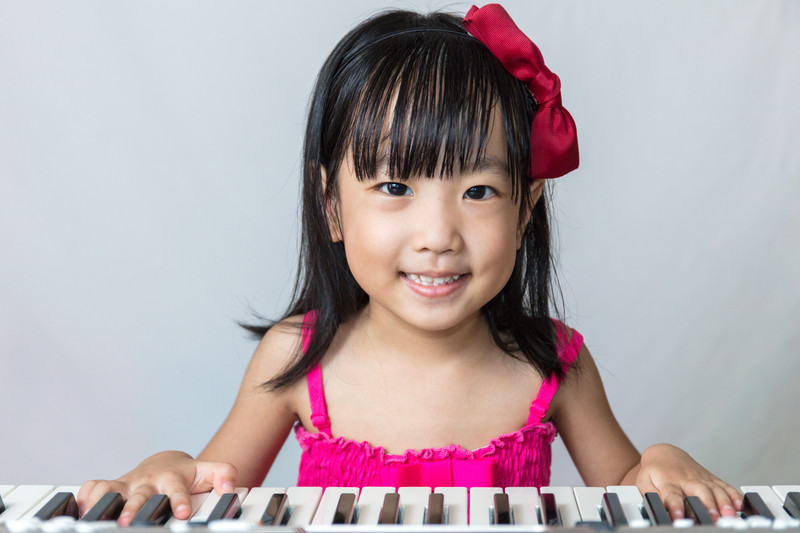
None of this is about lowering the bar. Our students go on to pass rigorous exams, perform at real recitals, and in some cases, get accepted into competitive music schools. But we've found, again and again, that the students who get there happily, the ones who still love the piano at sixteen the way they loved it at six, are the ones whose early lessons felt like play.
That's what we're building toward with every game, every flashcard, every silly rhythm exercise. Not just a technically skilled musician, but one who never stopped enjoying the process.
Curious what a first lesson with us actually looks like? Reach out at info@willanacademy.com or visit willanacademy.com.